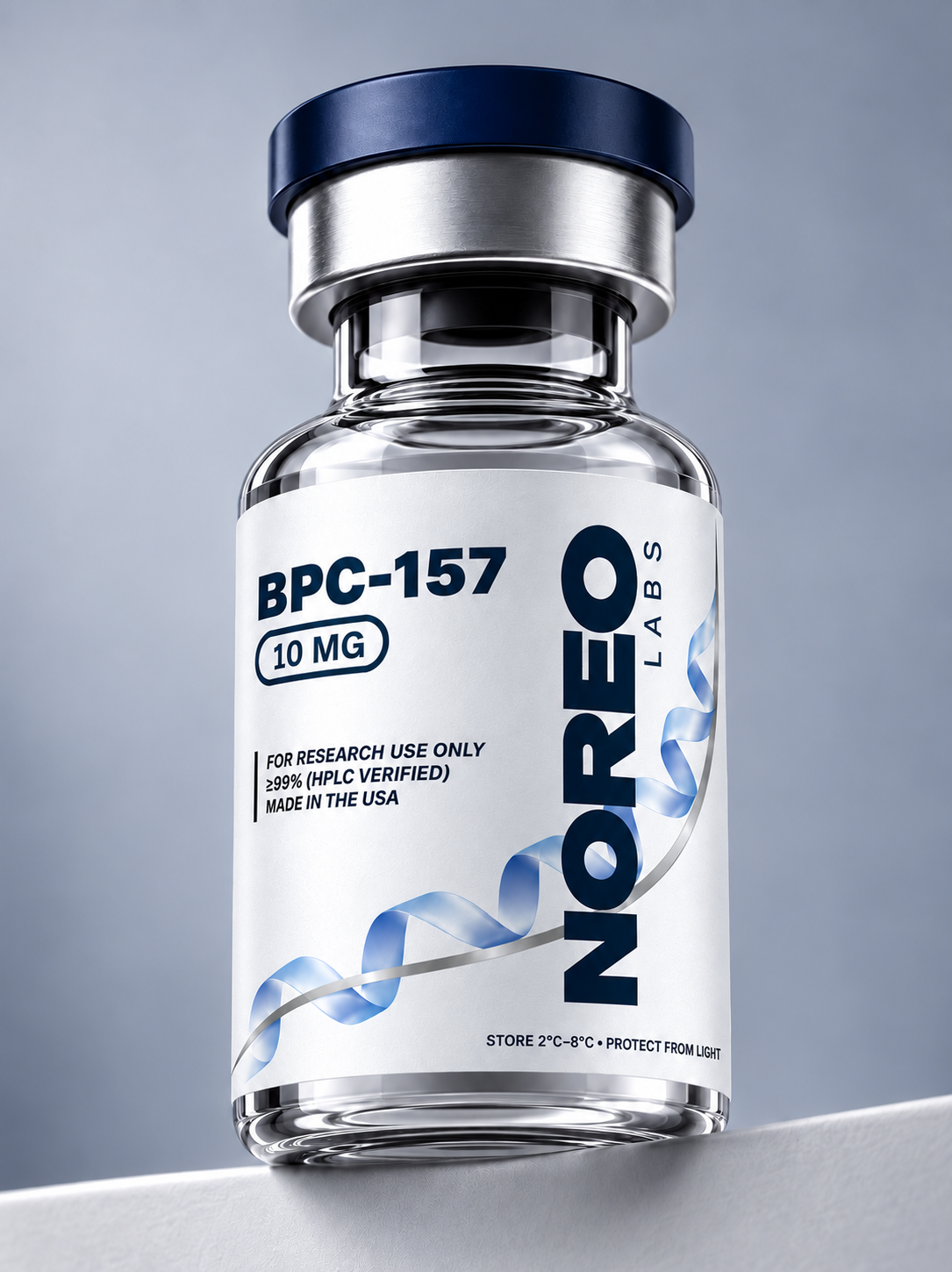
BPC-157 research peptide
$39.00 – $117.00
For research use only. Not for human or veterinary use.
NL-BPC-10
Tissue RepairBPC-157 research peptide
$78.00
CAD · institutional list · pricing provisional
- ≥99% by HPLC (lot-specific)
- Canada fulfilment
- ≥99% by HPLC (lot-specific)
- Canada fulfilment
Size
Order before 14:00 ET - ships next business day.
Third-party lab verified
Independently tested for identity and purity
- Batch
- BPC-081826
- Tested
- August 18, 2026
- Purity
- 99.74%
Tested by Testides
BPC-157
$78.00
Product description
BPC-157 research peptide is supplied to qualified Canadian institutions as a characterized laboratory material for in vitro endothelial and pathway-mapping studies. The compound is a synthetic pentadecapeptide (sequence GEPPPGKPADDAGLV) corresponding to a fragment originally identified in a human gastric-juice protein.
In vitro, the most mechanistically specific published work places BPC-157 at VEGFR2 activation and upregulation in endothelial cells, with downstream Akt–eNOS signalling reported in that system. Laboratories use the peptide as a defined ligand when recording angiogenic-pathway markers, nitric-oxide-related readouts, or comparator panels against other gastric-derived sequences. The broader literature is predominantly preclinical; this listing describes biochemical use in experimental systems only and does not assign a clinical indication.
The material is offered as a lyophilized vial. Identity data (CAS 137525-51-0, formula C62H98N16O22, molecular weight 1419.5 g/mol, PubChem CID 9941957) are listed on the specification table. Store lyophilized at −20 °C, protected from light, and handle under the receiving institution's chemical-hygiene plan.
Lots are sourced from a GMP-aligned peptide manufacturing partner and released against the stated HPLC purity for that lot (≥99% by HPLC, lot-specific). Identity, chromatographic purity, and related analytical results are documented on the lot certificate of analysis (COA). Retain the COA with the inventory record.
This listing is a research-use-only peptide offered to qualified Canadian institutions for in vitro and laboratory use. Purchasing access is limited to verified Canadian research institutions; individual consumer accounts are not accepted. It is not for human or veterinary use, is not intended for diagnostic procedures, and has not been evaluated or authorized by Health Canada as a drug, diagnostic, or medical product.
Material specifications
Fields a receiving desk can paste into an order record.
- SKU
- NL-BPC-10
- Pack
- 10 mg lyophilized vial
- Purity
- ≥99% by HPLC (lot-specific)
- CAS
- 137525-51-0
- Molecular formula
- C62H98N16O22
- Molecular weight
- 1419.5 g/mol
- Sequence
- GEPPPGKPADDAGLV
- PubChem CID
- 9941957