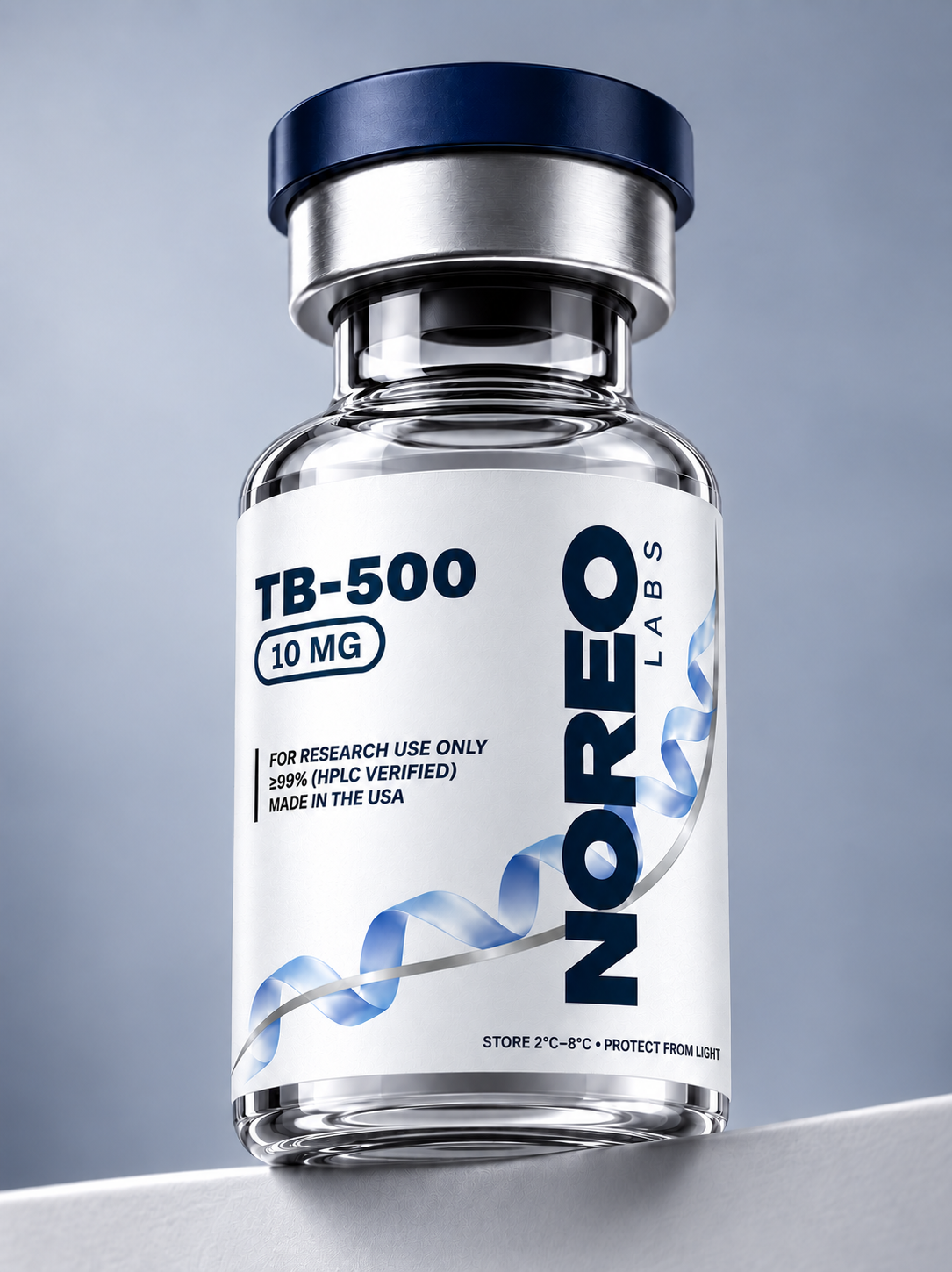
TB-500 research peptide
$44.00 – $132.00
For research use only. Not for human or veterinary use.
NL-TB5-10
Tissue RepairTB-500 research peptide
$88.00
CAD · institutional list · pricing provisional
- ≥98% by HPLC (lot-specific)
- Canada fulfilment
- ≥98% by HPLC (lot-specific)
- Canada fulfilment
Size
Order before 14:00 ET - ships next business day.
Third-party lab verified
Independently tested for identity and purity
- Batch
- TB-080726
- Tested
- August 07, 2026
- Purity
- 99.2%
Tested by Testides
TB-500
$88.00
Product description
TB-500 research peptide is supplied to qualified Canadian institutions as a characterized laboratory material for in vitro cytoskeletal and actin-binding studies. The compound is the N-acetylated heptapeptide Ac-LKKTETQ, corresponding to the actin-binding motif of thymosin β4.
In vitro, TB-500 is used to probe G-actin sequestration and cytoskeletal dynamics independently of the full 43-residue parent protein. Typical designs apply the fragment to purified actin systems or cultured cells and record monomer–polymer equilibria, motility-related markers, or head-to-head comparisons with intact thymosin β4. The fragment is not chemically equivalent to the parent protein; interpret results as motif-level pharmacology. This listing describes biochemical use in experimental systems only.
The material is offered as a lyophilized vial. Identity data (CAS 885340-08-9, formula C38H68N10O14, molecular weight 889.0 g/mol, PubChem CID 62707662) are listed on the specification table. Store lyophilized at −20 °C, protected from light, and handle under the receiving institution's chemical-hygiene plan.
Lots are sourced from a GMP-aligned peptide manufacturing partner and released against the stated HPLC purity for that lot (≥98% by HPLC, lot-specific). Identity, chromatographic purity, and related analytical results are documented on the lot certificate of analysis (COA). Retain the COA with the inventory record.
This listing is a research-use-only peptide offered to qualified Canadian institutions for in vitro and laboratory use. Purchasing access is limited to verified Canadian research institutions; individual consumer accounts are not accepted. It is not for human or veterinary use, is not intended for diagnostic procedures, and has not been evaluated or authorized by Health Canada as a drug, diagnostic, or medical product.
Material specifications
Fields a receiving desk can paste into an order record.
- SKU
- NL-TB5-10
- Pack
- 10 mg lyophilized vial
- Purity
- ≥98% by HPLC (lot-specific)
- CAS
- 885340-08-9
- Molecular formula
- C38H68N10O14
- Molecular weight
- 889.0 g/mol
- Sequence
- Ac-LKKTETQ
- PubChem CID
- 62707662