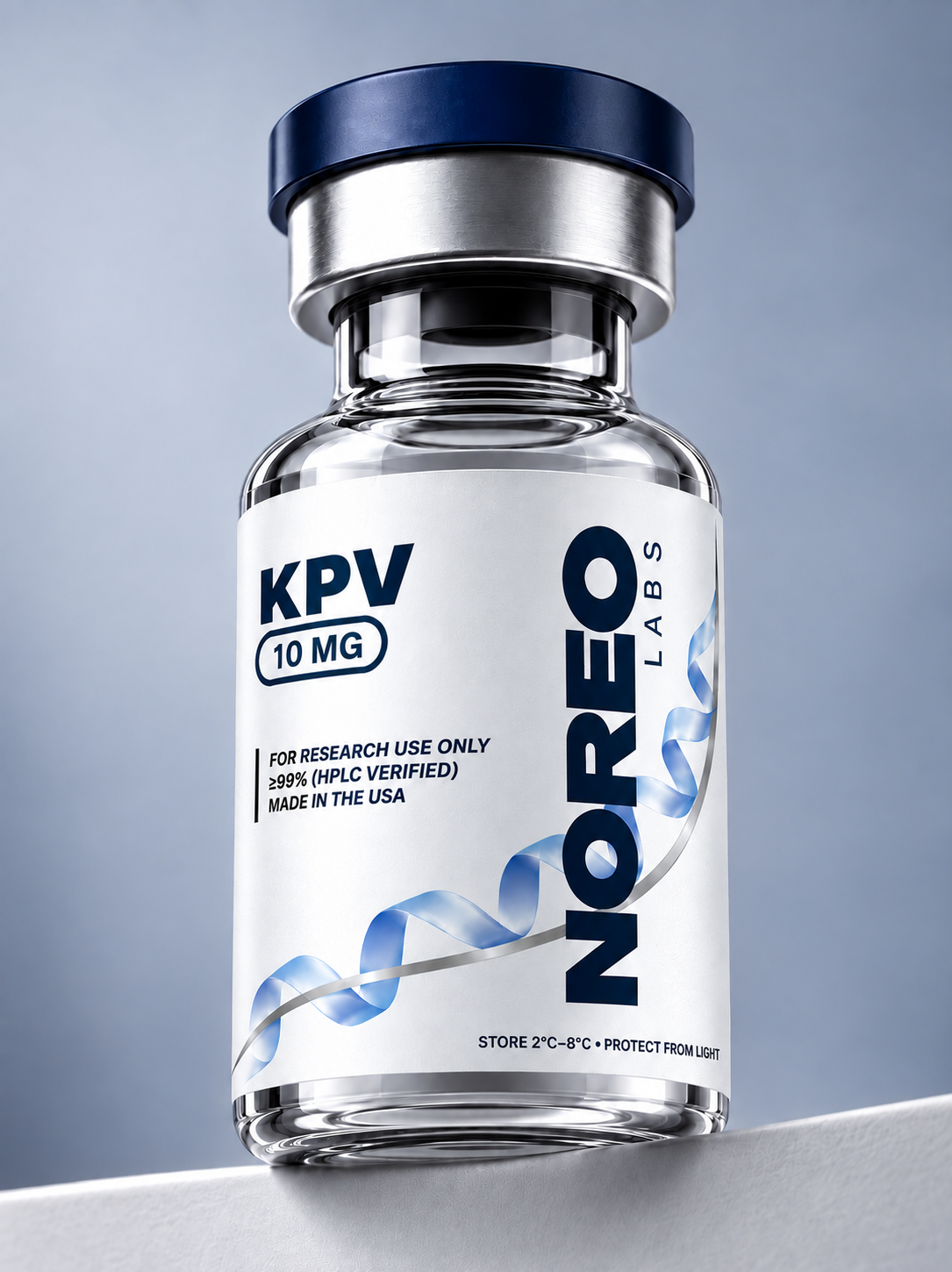
KPV research peptide
$36.00 – $108.00
For research use only. Not for human or veterinary use.
NL-KPV-10
Tissue RepairKPV research peptide
$72.00
CAD · institutional list · pricing provisional
- ≥98% by HPLC (lot-specific)
- Canada fulfilment
- ≥98% by HPLC (lot-specific)
- Canada fulfilment
Size
Order before 14:00 ET - ships next business day.
Third-party lab verified
Independently tested for identity and purity
- Batch
- KPV-072626
- Tested
- July 26, 2026
- Purity
- 99.7%
Tested by Testides
KPV
$72.00
Product description
KPV research peptide is supplied to qualified Canadian institutions as a characterized laboratory material for in vitro melanocortin-fragment and NF-κB-pathway studies. The compound is the C-terminal tripeptide of α-melanocyte-stimulating hormone (residues 11–13; Lys-Pro-Val).
In vitro, KPV is used to dissect signalling attributed to the α-MSH C-terminus in cell models, including NF-κB-pathway readouts, without the pigmentary-domain pharmacology of full-length α-MSH at melanocortin receptors. Typical designs apply the tripeptide to epithelial or immune-cell cultures and record transcription-factor activity, cytokine-transcript panels, or comparisons against α-MSH and other fragments. This listing describes biochemical use in experimental systems only.
The material is offered as a lyophilized vial. Identity data (CAS 67727-97-3, formula C16H30N4O4, molecular weight 342.4 g/mol, PubChem CID 125672) are listed on the specification table. Store lyophilized at −20 °C, protected from light, and handle under the receiving institution's chemical-hygiene plan.
Lots are sourced from a GMP-aligned peptide manufacturing partner and released against the stated HPLC purity for that lot (≥98% by HPLC, lot-specific). Identity, chromatographic purity, and related analytical results are documented on the lot certificate of analysis (COA). Retain the COA with the inventory record.
This listing is a research-use-only peptide offered to qualified Canadian institutions for in vitro and laboratory use. Purchasing access is limited to verified Canadian research institutions; individual consumer accounts are not accepted. It is not for human or veterinary use, is not intended for diagnostic procedures, and has not been evaluated or authorized by Health Canada as a drug, diagnostic, or medical product.
Material specifications
Fields a receiving desk can paste into an order record.
- SKU
- NL-KPV-10
- Pack
- 10 mg lyophilized vial
- Purity
- ≥98% by HPLC (lot-specific)
- CAS
- 67727-97-3
- Molecular formula
- C16H30N4O4
- Molecular weight
- 342.4 g/mol
- Sequence
- KPV
- PubChem CID
- 125672